Friday, December 16, 2011

Protozoa

         Protozoas are ingestive, animal-like protists and is introduced in chapter 28: "The Origins of Eukaryotic Diversity".  Below are some examples of each phyla of protozoa.

Flagellate

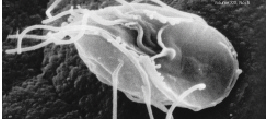
Giardia lamblia 

       This type of protist has one or more flagellas and moved with the help of the flagellas.  While other types of protists may not have flagellas.

Amoeboid

Ammonia Tepida

They are mainly distinctive due to their irregular shapes.  They usually live underwater and they use their entire membrane to breathe.

 Apicomplexa

Malaria (Plasmodium)
The characteristic that allows this protist to be distinct is that it has a dapicoplast and an apical complex structure that involves penetrating their host's cell. They are also unicellular, parasites to animals, and spore-forming.

The Cell Wordle (Tour of the Cell, Cell Membrane, Cell Communication)

Wordle: Untitled
      The basic concepts of cells can be summarized with chapters 7, 8, and 11.  The words above were therefore chosen from those following chapters.  They were "The Tour of the Cell", "Cell Membrane", and "Cell Communication".  In the first chapter gave us a general tour into the cell and it's many characteristics and organelles, which are represented by the vocabulary chosen above.  The cell membrane chapter was about the properties and functions of the cell's membrane.  Starting with its structure the book moved on to its job in regulating the different substances that enter and exit the cell, these words are also present in the wordle.  The last chapter, chapter 11 of "Cell Communication" describes how cells work and interact with each other, therefore those words also appear on the wordle above.  

Wednesday, December 14, 2011

Prokaryote and Eukaryotes unit (bacteria, viruses, fungi and protista)

The Prokaryote and Eukaryote Units included the topics of bacteria, virus, fungi, and protist. Protists are a type of eukaryote; early eukaryotes were protist before they evolved into plants, fungi, and animals.  Fungi is represented here, since fungi are also eukaryotic organism that have their own kingdom. They are decomposers and symbionts that absorbs nutrition for survival. Viruses are infectious particles and bacteria have circular chromosome and may have additionl genes carried on plasmids.  This wordle consists of words that represents the main ideas of viruses, bacteria, fungi, and protist.

Cellular Metabolism Wordle: Energy Unit (Photosynthesis and Cell Metabolism)

Wordle: Untitled
The words above are from Chapters 6: An Introduction to Metabolism and Chapter 10: Photosynthesis.  In Chapter 6 of metabolism is about the totality of the chemical reactions that take place in living organisms. "Cold chemistry" and energy transformation are the main topics of this chapter and is summarized by the words chosen above. In Chapter 10 of photosynthesis, photosynthesis is described to be the process where light energy from the sun is converted into chemical energy to be stored in organic molecules.  The basic ideas and main topics of the process of photosynthesis is represented above on the wordle.  The wordle ultimately summarizes the basic ideas of the energy unit that is made up of Chapters 6 and 10.

Thursday, December 8, 2011

Comparing a Bacteria to a Virus to a Prion to a Protist

Bacteria
Escherichia coli
Bacteria has a short generation span of bacteria that helps them adapt to changing environments.  The genetic recombination help produce new bacterial strains, processes such as transformation and transduction are involved in bacteria. Individual bacteria can adjust their metabolism to environmental change with the help of the control of gene expression. 


Virus
Rotavirus
Viruses are genomes enclosed in a protective coat. Its structures consists of the capsid, viral envelopes, and are found in bacteriophages/ phages.  They can reproduce, but only in a host cell.  Lytic or lysogenic cycles are used by phages to reproduce. In different modes, such as infection and  replication, animal viruses are diverse.  Vaccines are used to react against disease agents.  For evolution, scientist believe that they may have evolved from other mobile genetic elements. 


Prion 
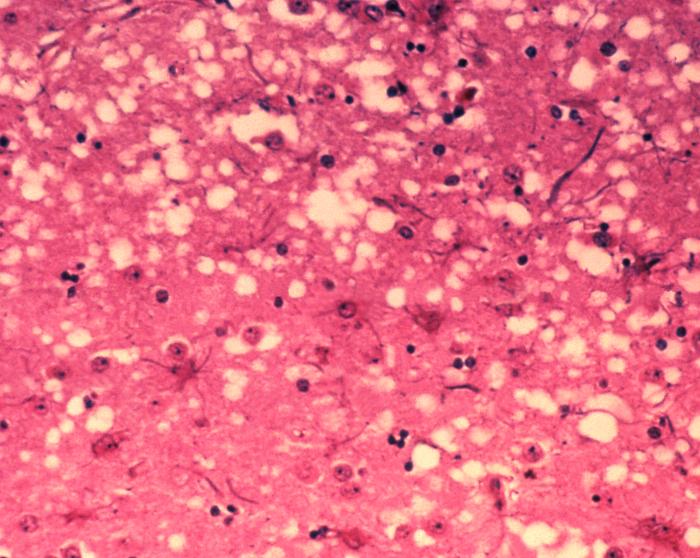
Prion-Affected Tissue
Prions are infectious agents that are simpler than viruses.  They are protein infectious agents that may have been linked to degenerative brain diseases.  Some of these diseases may have been Creutzfedt- Jacob and the "Mad Cow Disease.  These proteins cannot reproduce, but they spread disease when they convert normal cellular proteins into a defective form of the prion.  


Protist
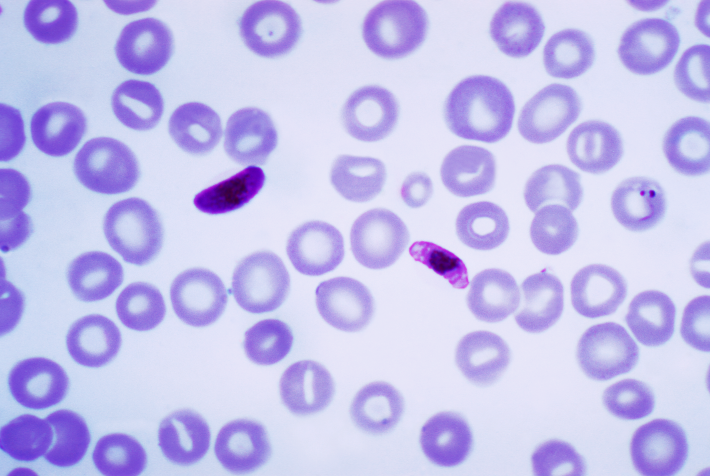
Plasmodium Falciparum 
Protist are eukaryotic microorganisms that belong in the Protista kingdom that includes unicellular organisms.  They may act as pathogens of animals and plants.  They reproduce using gametes or with binary fission. They control metabolism by using filter feeding, their cell membrane, and food vacuoles. 

Sunday, November 27, 2011

3 Beneficial Bacteria

1. Bifidobacterium 


This probiotic is commonly found in yogurt, animals, mammals; such as, the human intestines.  It importance is reflected in this ability to regulate intestinal microbial homeostasis, inhibit pathogens and harmful bacteria that tends to infect the gut mucosa, modulate local and systemic immune responses,  repress procarcinogenic enzymatic activities within the microbiota, produce vitamins, and  bioconvert dietary compounds into bioactive molecules.  Bifidobacteria are also used to prevent diarrhea, and to restore probiotics that were removed by radiation, chemotherapy, diarrhea, antibiotics, etc.


2. Lactobacillus Rhamnosus


This bacterium was once thought to be a part of the species L. casei, but later it was considered to be its own specie.  Lactobacillus rhamnosus is also found in yogurt and many other dairy or dairy related products.  It is beneficial, because it can inhibit the adhesion and growth of pathogens, by releasing acids, bacteriocins, and hydrogen peroxide.  It also leads to the prevention of diarrhea and is used for probiotic therapy. 


3. Lactobacillus Delbrueckii Subsp. Bulgaricus


This type of bacteria was known as Lactobacillus bulgaricus before 1984, but is now known as Lactobacillus Delbrueckii Subsp. Bulgaricus .  It is used to produce yogurt and is naturally and usually found in fermented products.  It is used to preserve milk since it produces lactic acid when it feeds on lactose.  It is beneficial, because helps people that are lactose intolerant, since their digestive systems lack enzymes to break down lactose into simple sugars. 
Bacterial Transformation and Transduction


Bacterial transformation is when the genes of a cell is altered by a direct uptake, as shown in Stanley Cohen and Herbert Boyer's experiment.  Bacterial transduction is another process where DNA is transferred from one bacterium to another bacterium by a virus.  They showed bacterial transformation, and later bacterial transduction, by inserting the recombinant DNA they made into the E. coli bacteria by the process of plasmid.  Through that they were able to induce the uptake and show the expression of a new DNA sequence, showing the process of bacterial transformation.  
(The above post is based on the following link: http://www.dnalc.org/view/15916DNAtransformation.html.
The pictures above are taken directly from the link; not all of the steps are shown in the pictures above.)